Showing posts with label UNESCO World Heritage. Show all posts

March 25, 2013

Agra Fort

Agra Fort, is a monument, ‎ a UNESCO World Heritage site located in Agra, Uttar Pradesh, India. It is about 2.5 km northwest of its more famous sister monument, the Taj Mahal. The fort can be more accurately described as a walled city.
Agra Fort was originally a brick fort, held by the Hindu Sikarwar Rajputs. It was mentioned for the first time in 1080 AD when a Ghaznavide force captured it. Sikandar Lodi (1488–1517) was the first Sultan of Delhi who shifted to Agra and lived in the fort. He governed the country from here and Agra assumed the importance of the second capital. He died in the fort at 1517 and his son, Ibrahim Lodi, held it for nine years until he was defeated and killed at Panipat in 1526. Several palaces, wells and a mosque were built by him in the fort during his period.


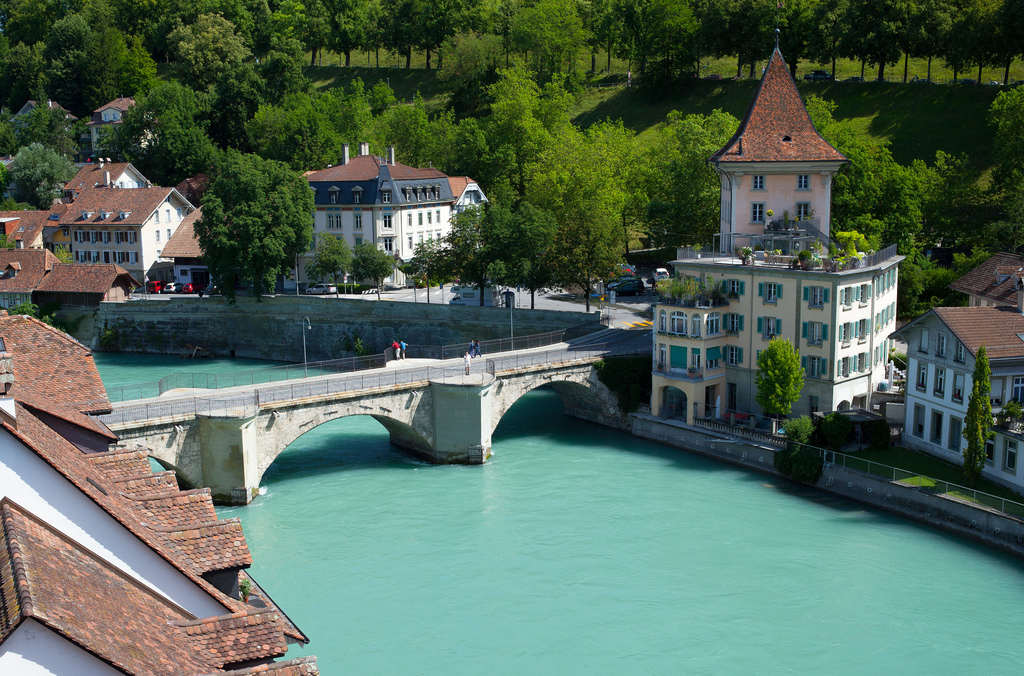
Bern


The city of Bern or Berne is the Bundesstadt (federal city, de facto capital) of Switzerland, and, with (as of December 2011) a population of 125,681, the fifth most populous city in Switzerland. The Bern agglomeration, which includes 43 municipalities,has a population of 353,300. The metropolitan area had a population of 660,000 in 2000. Bern is also the capital of the Canton of Bern, the second most populous of Switzerland's cantons.
The official language of Bern is German, but the main spoken language is the Alemannic dialect called Bernese German.
In 1983 the historic old town in the centre of Bern became a UNESCO World Heritage Site and Bern is ranked among the world’s top ten cities for the best quality of life (2010).


April 12, 2012

Jiuzhaigou Valley

Jiuzhaigou Valley (simplified Chinese: 九寨沟; traditional Chinese: 九寨溝; pinyin: Jiǔzhàigōu; literally "Valley of Nine Villages"; Tibetan: གཟི་རྩ་སྡེ་དགུ།, Wylie: gzi-rtsa sde-dgu, ZYPY: Sirza Degu) is a nature reserve and national park located in northern Sichuan Province of southwestern China.
Jiuzhaigou Valley is part of the Min Shan mountain range on the edge of the Tibetan Himalayan Plateau and stretches over 72,000 hectares. It is known for its many multi-level waterfalls, colorful lakes, and snow-capped peaks. Its elevation ranges from 2,000 m to 4,500 m.
Jiuzhaigou Valley was inscribed by UNESCO as a World Heritage Site in 1992 and a World Biosphere Reserve in 1997. It belongs to the category V (Protected Landscape) in the IUCN system of protected area categorization.

Jiuzhaigou (literally "Nine Village Valley") takes its name from the nine Tibetan villages along its length.
The remote region was inhabited by various Tibetan and Qiang peoples for centuries. Until 1975 this inaccessible area was little known. Extensive logging took place until 1979, when the Chinese government banned such activity and made the area a national park in 1982. An Administration Bureau was established and the site officially opened to tourism in 1984; layout of facilities and regulations were completed in 1987.
The site was inscribed by UNESCO as a World Heritage Site in 1992 and a World Biosphere Reserve in 1997. The tourism area is classified as a AAAAA scenic area by the China National Tourism Administration.


Related Posts Plugin for WordPress, Blogger...